How to Stop Overthinking: 10 Practical Ways to Quiet Your Mind and Feel More Present
Have you ever replayed a conversation in your head long after it ended? Maybe you sent a message and immediately started wondering whether you sounded strange. Perhaps you made a small mistake during the day and spent hours thinking about what you should have done differently.
Sometimes, the mind simply refuses to let a thought go.
You tell yourself to stop thinking about it, but that seems to make the thought even louder. One question leads to another, then another, until a simple concern becomes an endless mental conversation.
Learning how to stop overthinking does not mean forcing your mind to become completely silent. Thinking is normal, and worrying about things that matter to you is part of being human. The goal is to recognize when thinking has stopped being useful and learn how to redirect your attention.
Overthinking often involves repetitive thoughts about problems, mistakes, possibilities or uncertainties. The American Psychological Association describes related patterns such as repetitive negative thinking and rumination as common features associated with emotional distress.
The good news is that you can develop better ways of responding to these thought patterns.
This guide explores how to stop overthinking, why it happens, how mindfulness can help and practical habits you can use to create a calmer relationship with your thoughts.
How to Stop Overthinking by Understanding What It Really Means
Before learning how to stop overthinking, it helps to understand what overthinking actually is.
Thinking about a problem is not automatically overthinking. In fact, careful thinking can help you make decisions, prepare for challenges and learn from mistakes.
The difference is usually whether your thinking is moving you toward something useful.
For example, imagine that you have an important assignment coming up.
Healthy problem-solving might sound like:
- What exactly do I need to complete?
- When can I work on it?
- What information do I need?
- What should I do first?
Overthinking can sound very different:
- What if I fail?
- What if everyone thinks I’m not good enough?
- What if something goes wrong?
- Why didn’t I start earlier?
- What if I make another mistake?
The first approach produces action. The second can produce an endless loop.
This is why learning how to stop overthinking isn’t really about stopping yourself from thinking. It is about learning when your thoughts are helping you and when they are simply repeating themselves.
How to Stop Overthinking Without Trying to Eliminate Every Thought
One common mistake people make when trying to stop overthinking is attempting to completely control their thoughts.
You might tell yourself:
“I shouldn’t be thinking about this.”
Then the thought comes back.
“Why am I still thinking about this?”
Now you’re thinking about the thought itself.
Mindfulness takes a different approach. Instead of trying to force thoughts away, you notice them without automatically following them.
The NHS explains that mindfulness is not about making thoughts disappear. Instead, it involves recognizing thoughts as mental events that come and go and returning your attention to the present.
That distinction is important.
Your mind will wander. You may remember something embarrassing. You may worry about tomorrow. You may imagine what could happen next week.
You don’t necessarily have to fight those thoughts.
You can simply notice them and decide whether you want to give them more attention.
That small pause between having a thought and reacting to it is one of the most useful skills you can develop.
How to Stop Overthinking by Identifying Your Thought Loop
Overthinking often follows a recognizable pattern.
Something happens.
You interpret it.
Your interpretation creates another question.
That question creates another concern.
Before long, you are several steps away from what actually happened.
For example:
Event: A friend replies to your message several hours later.
Thought: Maybe they’re upset with me.
Next thought: Did I say something wrong?
Next thought: Maybe I shouldn’t have sent that message.
Next thought: What if they don’t want to talk to me anymore?
Notice what happened.
The original event was simply a delayed response. Your mind created a much larger story around it.
One of the first steps in learning how to stop overthinking is recognizing this process.
When you notice yourself going in circles, pause and ask:
- What actually happened?
- What am I assuming?
- Do I have evidence for that assumption?
- Am I trying to solve a problem or predict something I cannot know?
- Is there anything useful I can do right now?
These questions can help separate facts from assumptions.
How to Stop Overthinking by Writing Your Thoughts Down
When thoughts remain inside your head, they can feel much larger than they actually are.
Writing them down gives your mind somewhere else to put them.
You don’t need an expensive journal or complicated system. A notebook, computer or notes app can work.
Write down exactly what is bothering you.
For example:
What I’m worried about:
I might perform badly tomorrow.
What I know:
I have prepared for the task.
What I don’t know:
Exactly how tomorrow will go.
What I can control:
I can prepare tonight and get enough rest.
My next step:
Review my notes for 30 minutes, then stop.
This simple process changes a vague worry into something concrete.
The NHS recommends writing worries down and using structured “worry time” as a way of managing persistent worries rather than allowing them to take over the entire day.
Writing is not magic, but it can help you move from mental repetition toward practical thinking.
How to Stop Overthinking by Separating Problems From Possibilities
One of the most useful ways to learn how to stop overthinking is to separate problems you can act on from situations you cannot control.
Consider these two statements:
“I haven’t finished my assignment.”
That is a problem with a possible action.
“What if something terrible happens tomorrow?”
That may be a possibility rather than a problem you can solve right now.
When you have a practical problem, ask:
What is one useful thing I can do about this?
Then do it.
If you cannot act on something at the moment, acknowledge that reality instead of repeatedly trying to solve the unsolvable.
A simple table can help:
| Type of thought | Example | Helpful response |
|---|---|---|
| Current problem | I have work due tomorrow | Make a realistic plan |
| Past mistake | I said something awkward | Learn from it and move forward |
| Future possibility | What if everything goes wrong? | Focus on what you can prepare for |
| Uncertainty | I don’t know what someone thinks | Accept that you cannot read their mind |
| Practical concern | I forgot an important task | Write it down and schedule it |
The goal is not to pretend that uncertainty doesn’t exist.
It is to stop spending unlimited mental energy trying to obtain certainty that may not be available.
How to Stop Overthinking by Practicing Mindfulness
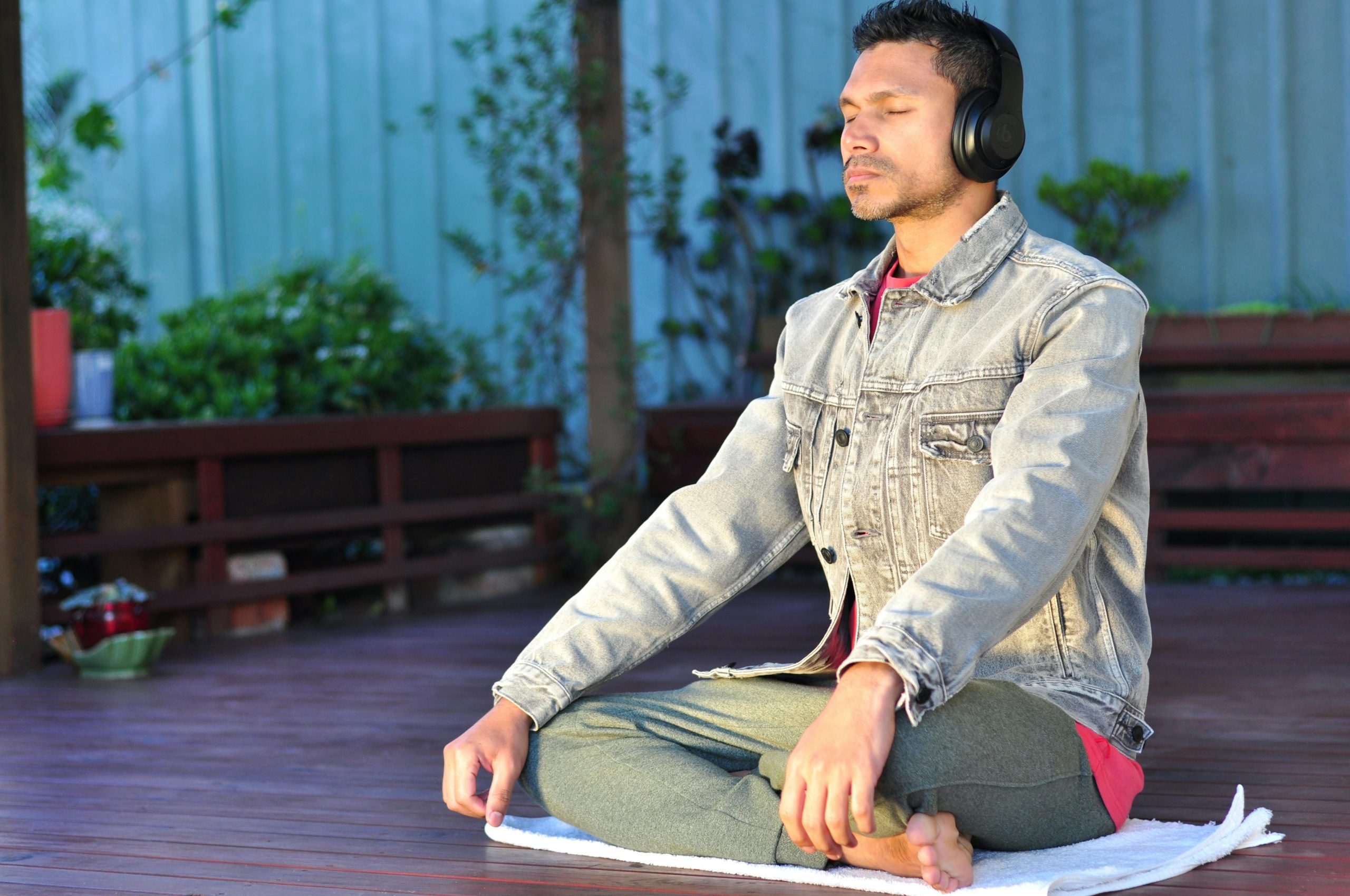
Mindfulness is particularly relevant to learning how to stop overthinking because it trains attention toward the present moment.
Imagine sitting quietly for a few minutes and focusing on your breathing.
Eventually, your mind wanders.
You remember something from yesterday.
You think about tomorrow.
You start planning something.
Instead of criticizing yourself, you notice that your attention has wandered and gently bring it back.
That is the practice.
Mayo Clinic explains that meditation can involve focusing attention and repeatedly returning to that focus when the mind wanders. It may also support relaxation, focus and stress management.
You can begin with just a few minutes.
Try this:
- Sit somewhere comfortable.
- Notice your breathing.
- Pay attention to the sensation of breathing in and out.
- When a thought appears, notice it.
- Avoid judging yourself for having the thought.
- Gently return your attention to your breathing.
- Repeat the process whenever your mind wanders.
You don’t have to empty your mind.
In fact, a busy mind does not mean you are failing at mindfulness.
Every time you notice your attention has wandered and bring it back, you are practicing.
How to Stop Overthinking by Using the Present Moment
Overthinking frequently pulls attention into the past or future.
The past becomes:
“Why did I do that?”
The future becomes:
“What if this happens?”
Meanwhile, the present moment gets overlooked.
A simple grounding exercise can help you return to what is actually happening around you.
Pause and notice:
- Five things you can see
- Four things you can physically feel
- Three things you can hear
- Two things you can smell
- One thing you can taste or appreciate
You can also simply describe your surroundings.
Notice the temperature.
Notice your breathing.
Notice the chair beneath you.
Listen to sounds around you.
The purpose is not to make every uncomfortable thought disappear. It is to give your attention something real and immediate to engage with.
How to Stop Overthinking by Creating a Worry Time
It may sound strange to deliberately schedule time for worrying, but structured worry time can be useful.
Instead of allowing worries to interrupt you throughout the day, you can write them down and return to them during a specific period.
For example, choose 10 to 15 minutes in the evening.
During that period:
- Review the worries you wrote down.
- Decide which ones require action.
- Write down the next step for practical problems.
- Acknowledge the worries you cannot control.
- When the time is over, return to another activity.
The NHS specifically recommends a short, scheduled “worry time” as one technique for preventing worries from taking over the entire day.
The idea isn’t to spend 15 minutes making yourself more worried.
It is to give your mind a structured place to process concerns.
Over time, you may find it easier to tell yourself, “I’ve written this down. I’ll deal with it at the appropriate time.”
How to Stop Overthinking by Taking One Small Action
Overthinking often becomes worse when you feel stuck.
You think about what needs to change, but you don’t know where to begin.
Instead of trying to solve everything at once, choose one small action.
If you’re worried about an upcoming test:
Don’t: Spend an hour imagining every possible way it could go wrong.
Do: Study one topic for 25 minutes.
If you’re worried about a project:
Don’t: Keep thinking about how much work remains.
Do: Open the document and write the first paragraph.
If you’re worried about an unresolved conversation:
Don’t: Replay it repeatedly.
Do: Decide whether a respectful conversation is actually necessary.
Small action gives your brain new information.
You are no longer simply thinking about the situation. You are responding to it.
How to Stop Overthinking by Challenging Unhelpful Thoughts
Not every thought deserves to be treated as a fact.
The mind can make assumptions quickly, particularly when you’re stressed.
For example:
“They haven’t replied, so they must be angry with me.”
There are many other possibilities.
Maybe they’re busy.
Maybe they haven’t seen the message.
Maybe they don’t know what to say.
Maybe they simply plan to respond later.
The important point is that you don’t know yet.
Try asking:
- Is this a fact or an interpretation?
- What evidence supports this thought?
- What evidence doesn’t support it?
- Is there another reasonable explanation?
- What would I tell a friend thinking this way?
This doesn’t mean replacing every negative thought with an unrealistically positive one.
It means looking for a more balanced interpretation.
How to Stop Overthinking by Avoiding Perfectionism
Perfectionism can create fertile ground for overthinking.
If you believe every decision has to be perfect, even simple choices can become exhausting.
You might spend too long deciding:
- What to say
- Which option to choose
- Whether your work is good enough
- Whether someone will approve of you
- Whether you made the “right” decision
Sometimes, a good decision made in reasonable time is more useful than a perfect decision that takes forever.
Ask yourself:
What would “good enough” look like here?
That question can be surprisingly powerful.
It doesn’t mean lowering every standard.
It means recognizing that not every decision deserves hours of analysis.
How to Stop Overthinking by Limiting Digital Distractions
Modern technology gives your mind an almost endless supply of information.
Messages, social media, news, notifications and short videos can make it difficult to spend even a few minutes without external stimulation.
If you’re already struggling with repetitive thoughts, constantly switching between digital content may make it harder to settle your attention.
Consider creating simple boundaries:
- Turn off unnecessary notifications.
- Put your phone away when studying.
- Avoid checking messages every few minutes.
- Create periods without social media.
- Keep your bedroom as calm and distraction-free as possible.
- Take occasional walks without constantly checking your phone.
The aim isn’t to reject technology.
It’s to make sure technology isn’t controlling your attention.
How to Stop Overthinking at Night
Nighttime can be particularly difficult because there are fewer distractions.
During the day, work, school, conversations and activities occupy your attention.
Then you lie down.
Suddenly, your brain starts reviewing everything.
“Did I handle that situation correctly?”
“What do I need to do tomorrow?”
“What if something goes wrong?”
If this happens regularly, create a simple wind-down routine.
How to Stop Overthinking at Night With a Simple Routine
Try:
- Writing down tomorrow’s tasks before bed.
- Recording worries you want to revisit later.
- Putting your phone away for a while before sleeping.
- Reading something relaxing.
- Practicing slow, comfortable breathing.
- Keeping your bedtime routine consistent.
- Avoiding stressful conversations immediately before bed.
The purpose is to give your mind a transition between daytime activity and rest.
If persistent worry or racing thoughts are regularly interfering with sleep, it can be worth discussing the problem with a qualified healthcare professional rather than relying entirely on self-help strategies.
How to Stop Overthinking by Building a Calmer Daily Routine
Learning how to stop overthinking is not only about what you do during a difficult moment.
Your daily habits matter too.
Regular movement, adequate sleep, meaningful social connection, hobbies and periods of quiet can all contribute to better stress management. Mayo Clinic’s current guidance on chronic stress also emphasizes basics such as physical activity, sleep, relaxation techniques, journaling and supportive relationships.
A simple routine might look like this:
| Part of the day | Simple habit | Purpose |
|---|---|---|
| Morning | Avoid immediately checking every notification | Start the day intentionally |
| Afternoon | Take a short movement break | Reset attention |
| Evening | Write down unfinished tasks | Reduce mental clutter |
| Night | Spend some quiet time without constant stimulation | Prepare for rest |
| Weekly | Make time for hobbies and people you enjoy | Maintain balance |
You don’t need to transform your entire life overnight.
Small habits repeated consistently can be more realistic than dramatic changes that last only a few days.
How to Stop Overthinking When You Make a Mistake
Mistakes are one of the biggest triggers for repetitive thinking.
You may replay what happened because your brain is trying to learn from it.
That can be useful once.
But replaying the same moment 50 times rarely changes what happened.
Instead, use a three-step approach:
Recognize:
“I made a mistake.”
Learn:
“What can I do differently next time?”
Release:
“I’ve learned what I can from this situation.”
The final step can be the hardest.
Sometimes you don’t need another analysis.
You need permission to move forward.
Growth doesn’t require you to punish yourself indefinitely for something you wish you had handled differently.
How to Stop Overthinking and Become More Comfortable With Uncertainty
A major reason people overthink is the desire for certainty.
You want to know what will happen.
You want to know what someone thinks.
You want to know whether a decision will work.
You want to know whether everything will turn out well.
Unfortunately, life doesn’t provide that level of certainty.
Trying to mentally predict every possible outcome can become exhausting.
A healthier question is:
“What can I do with the information I have right now?”
That question moves your attention from impossible certainty toward practical action.
Mindfulness can also help because it encourages you to observe what is happening now instead of constantly trying to predict what happens next. Mayo Clinic’s guidance on coping with uncertainty similarly recommends focusing on what you can control and using mindfulness to return attention to the present.
How to Stop Overthinking With a Simple Five-Minute Reset
When you notice your thoughts beginning to spiral, try this quick reset.
Minute 1 — Pause
Stop whatever you’re doing for a moment.
Minute 2 — Breathe
Take slow, comfortable breaths and notice the physical sensation of breathing.
Minute 3 — Name the thought
Say internally:
“I’m worried about tomorrow.”
or:
“I’m replaying what happened earlier.”
Naming the experience can create a little distance between you and the thought.
Minute 4 — Ask what is controllable
Is there an action you can take?
If yes, identify it.
If no, acknowledge that you cannot solve it right now.
Minute 5 — Redirect
Return your attention to something concrete: your work, conversation, meal, walk or another appropriate activity.
This isn’t about guaranteeing that the thought never returns.
If it does, repeat the process.
How to Stop Overthinking Without Becoming Emotionally Detached
There is an important difference between managing overthinking and avoiding your emotions.
You don’t need to become someone who never worries.
You don’t need to stop caring about people.
You don’t need to ignore difficult experiences.
In fact, trying to suppress every uncomfortable emotion can create another struggle.
The goal is greater awareness.
You can care about something without thinking about it every minute.
You can acknowledge uncertainty without trying to predict every outcome.
You can learn from a mistake without replaying it endlessly.
You can experience an uncomfortable thought without automatically believing it.
That is where mindfulness and personal growth meet.
How to Stop Overthinking With These 10 Practical Habits
If you want a simple list to remember, start here:
- Notice when your thoughts begin repeating themselves.
- Write down what is bothering you.
- Separate facts from assumptions.
- Ask whether there is a practical action you can take.
- Use scheduled worry time instead of worrying all day.
- Practice returning your attention to the present.
- Challenge extreme or unsupported conclusions.
- Give yourself permission to make reasonable, imperfect decisions.
- Reduce unnecessary digital distractions.
- Build healthy routines around sleep, movement, relaxation and connection.
You don’t need to master all ten immediately.
Choose one or two and practice them consistently.
How to Stop Overthinking: When to Seek Extra Support
Occasional overthinking is a normal part of life.
However, persistent worry and repetitive thoughts can sometimes be connected with anxiety, depression or other mental-health difficulties.
Consider talking with a qualified mental-health professional if your thoughts are becoming difficult to manage or are regularly interfering with areas such as:
- Sleep
- School or work
- Relationships
- Concentration
- Daily responsibilities
- Your ability to enjoy ordinary activities
Professional support doesn’t mean that you’ve failed at managing your thoughts.
Sometimes you simply need better tools and guidance.
Cognitive behavioural therapy, for example, uses structured approaches to help people recognize unhelpful thought patterns and develop different responses. The NHS provides several self-help CBT techniques, including approaches for challenging unhelpful thoughts and managing worries.
How to Stop Overthinking and Start Living More Intentionally
Overthinking can make the mind feel as though it is constantly working without actually getting anywhere.
You analyze the conversation.
You reconsider the decision.
You predict tomorrow.
You revisit yesterday.
And eventually, you realize that hours have passed.
The answer isn’t to stop thinking altogether.
Your ability to think deeply is valuable. It helps you learn, plan, solve problems and understand yourself.
The skill is learning when thinking has become a loop.
When that happens, pause.
Ask yourself what is actually happening.
Separate what you know from what you’re imagining.
Decide whether there is an action you can take.
If there is, take one small step.
If there isn’t, give yourself permission to return to the present.
With practice, you may discover that a calmer mind isn’t a mind without thoughts. It is a mind that doesn’t have to follow every thought that appears.
And that may be the most useful lesson in learning how to stop overthinking: you don’t have to win an argument with your mind.
Sometimes, you simply need to notice where your attention has gone—and gently bring it back to where you are.